Key Litigation Risks (At a Glance)
- Social media posts are routinely tendered to test credibility and consistency of evidence.
- Deleted or private content may still be recovered or produced under subpoena.
- Inconsistent online activity can attract adverse findings, which can also lead to cost consequences.
- Poor handling of social media during a dispute can materially weaken an otherwise strong case.
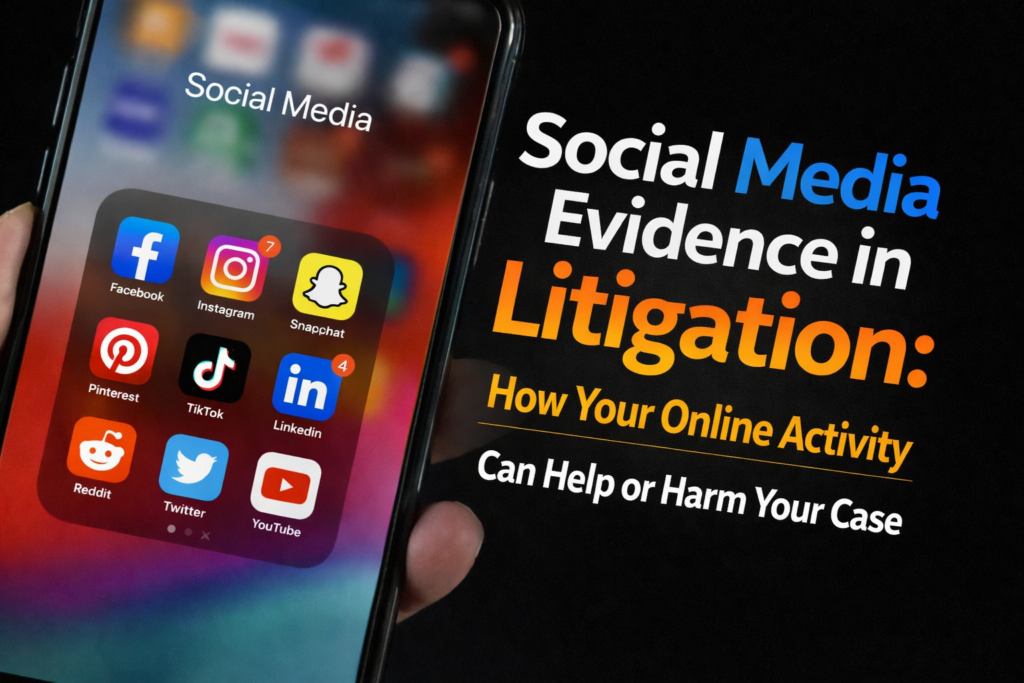
In modern litigation, social media is no longer peripheral. Australian courts and tribunals increasingly rely on online content provided as evidence in proceedings to assess credibility, establish factual timelines and test the reliability of sworn evidence. Facebook posts, Instagram stories, LinkedIn updates, WhatsApp messages and even deleted material are now routinely scrutinised in proceedings.
For parties involved in a dispute, social media can be a double‑edged sword. Used strategically, it can support a claim or defence. Used carelessly, it can significantly undermine a case.
Is Social Media Admissible as Evidence in Australian Courts?
Yes. Social media content is regularly admitted as evidence in Australian litigation, provided it is relevant and properly obtained. Courts generally treat social media content as documentary evidence and apply the same principles of admissibility.
This can include:
- Public and private posts;
- Photos and videos;
- Comments, reactions and tags;
- Direct messages and group chats; and
- Historical or deleted content, where it can be authenticated
Importantly, content does not need to be posted by the party themselves. Posts made by third parties — such as photographs in which a party is tagged — may also be relied upon if they are probative of an issue in dispute.
How Social Media Evidence Is Used in Litigation
1. Credibility and Consistency of Evidence in Court
One of the most significant uses of social media in litigation is to test the credibility of a witness.
Common examples include:
- Claims of incapacity or inability to work contradicted by photos or videos;
- Assertions of financial hardship undermined by posts depicting discretionary spending or lifestyle choices; and
- Denials of contact or involvement contradicted by online interactions.
Even minor inconsistencies can materially damage a party’s credibility and, in turn, the strength of their case.
2. Employment and Workplace Litigation
In unfair dismissal, general protections and employment-related proceedings, social media evidence is frequently decisive.
It is commonly relied upon to demonstrate:
- Breaches of workplace policies or codes of conduct
- Inappropriate or defamatory commentary about employers or colleagues
- Activity inconsistent with sick leave, injury claims or stated work capacity
- Misuse of confidential information
3. Commercial and Contractual Disputes
In commercial disputes, social media and electronic communications are increasingly used to fill evidentiary gaps where formal documentation is incomplete or disputed.
Such material may be relied upon to:
- Establish representations or assurances made outside formal contracts;
- Demonstrate intention, knowledge or reliance;
- Evidence the existence or continuation of business relationships; or
- Contradict later claims about the nature of an agreement.
Informal messages and posts, often created without any consideration of how it might be later used in a legal context, can assume disproportionate importance once a dispute reaches court.
Deleted or Private Content: A False Sense of Security
A common misconception is that deleted or private content is beyond reach. In practice, social media material may still be produced through:
- Screenshots captured by other parties;
- Metadata and platform records;
- Forensic recovery processes; and
- Subpoenas or court orders.
Once litigation is contemplated or on foot, deliberately deleting or altering online content may expose a party to allegations of destruction of evidence, potentially resulting in adverse inferences being drawn against that party or cost consequences.
Managing Social Media Risk During a Legal Dispute
If you are involved in, or anticipate, litigation:
You should:
- Assume all online activity may be scrutinised;
- Preserve existing social media content (with some limited exceptions, for example, relating to content that is allegedly defamatory);
- Exercise restraint in posting, commenting or reacting; and
- Obtain legal advice before making changes to online accounts.
You should avoid:
- Posting about the dispute or the opposing party;
- Attempting to justify or explain your position online;
- Deleting or editing content without advice; and
- Encouraging others to post material on your behalf.
In many cases, silence is the most effective risk‑management strategy.
Strategic Use of Social Media Evidence: The Role of Litigation Lawyers
Effective use — or containment — of social media evidence is often a strategic issue rather than a purely technical one. A lawyer can:
- Identify potentially damaging material early;
- Advise on evidence preservation obligations; and
- Challenge the admissibility or weight of social media evidence.
Early and informed advice can prevent avoidable damage and, in some cases, materially alter the trajectory of a dispute.
Conclusion: Manage the Risk Before It Manages You
In contemporary litigation, social media is no longer a side issue. Courts increasingly expect parties to understand that their online activity forms part of the evidentiary landscape and will be assessed alongside formal documents and sworn evidence.
Seemingly casual posts, messages or reactions can undermine credibility, expose inconsistencies or give rise to adverse inferences — often irreversibly. Once proceedings are underway, the opportunity to control the damage is limited.
If you are involved in contentious proceedings, or anticipate that a dispute may escalate, early and strategic legal advice is critical. Proactive management of social media evidence can preserve your position, minimise risk and, in some cases, determine the outcome of the case.
Macfarlane Law is a specialist litigation and dispute resolution firm. We advise individuals, directors and businesses on managing evidentiary risk and prosecuting or defending proceedings where credibility and documentary evidence are critical.
If you are involved in a dispute — or anticipate that one may escalate — early advice can be decisive. Contact Macfarlane Law to obtain strategic, commercially focused advice on managing social media evidence and protecting your position in litigation.